
Construction
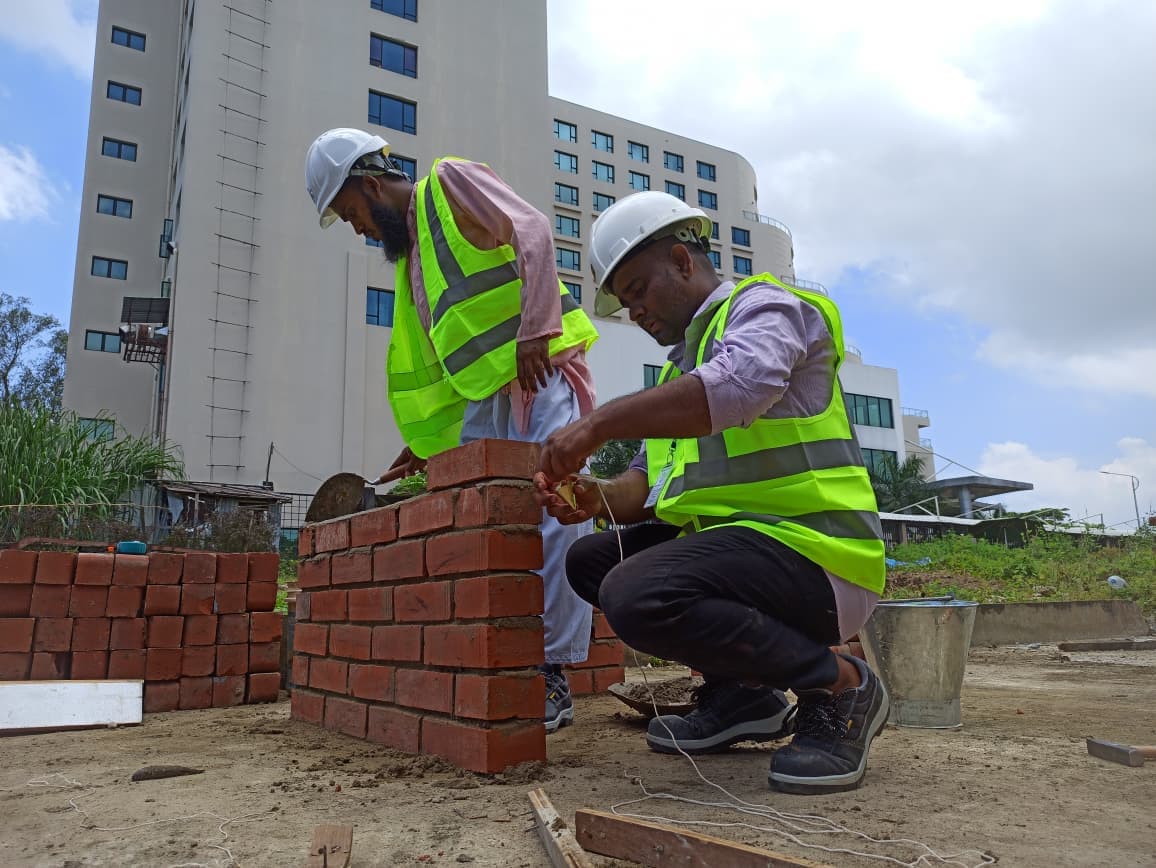
Bricklaying from Foundation through to Level 2, taught on real walls. The trade that gets an engineering graduate onto a British site — and, for someone with your education, the way in rather than the ceiling.
Who this is for
For graduates ready to work with their hands.
A BSc in Civil Engineering, a Diploma in Civil Engineering, or a Bachelor of Architecture.
English good enough to start learning in. We assess it first and teach it every day.
No experience with tools. Almost nobody arrives with it.
What you learn
Nobody arrives able to do this. You will leave able to do it well.
Most of our candidates have never laid a brick. Your degree makes you quicker at the setting out, the tolerances and the sequencing — the hands take practice, and practice is what the programme is.
Tools, materials, safety
Trowel, level, line, gauge rod. How mortar behaves, how brick behaves, and how not to hurt yourself or anyone near you.
Setting out
Ranging, gauging, profiles, datum. The part your engineering education already makes you good at — and the part that separates a tradesperson from a labourer.
Bonds and walling
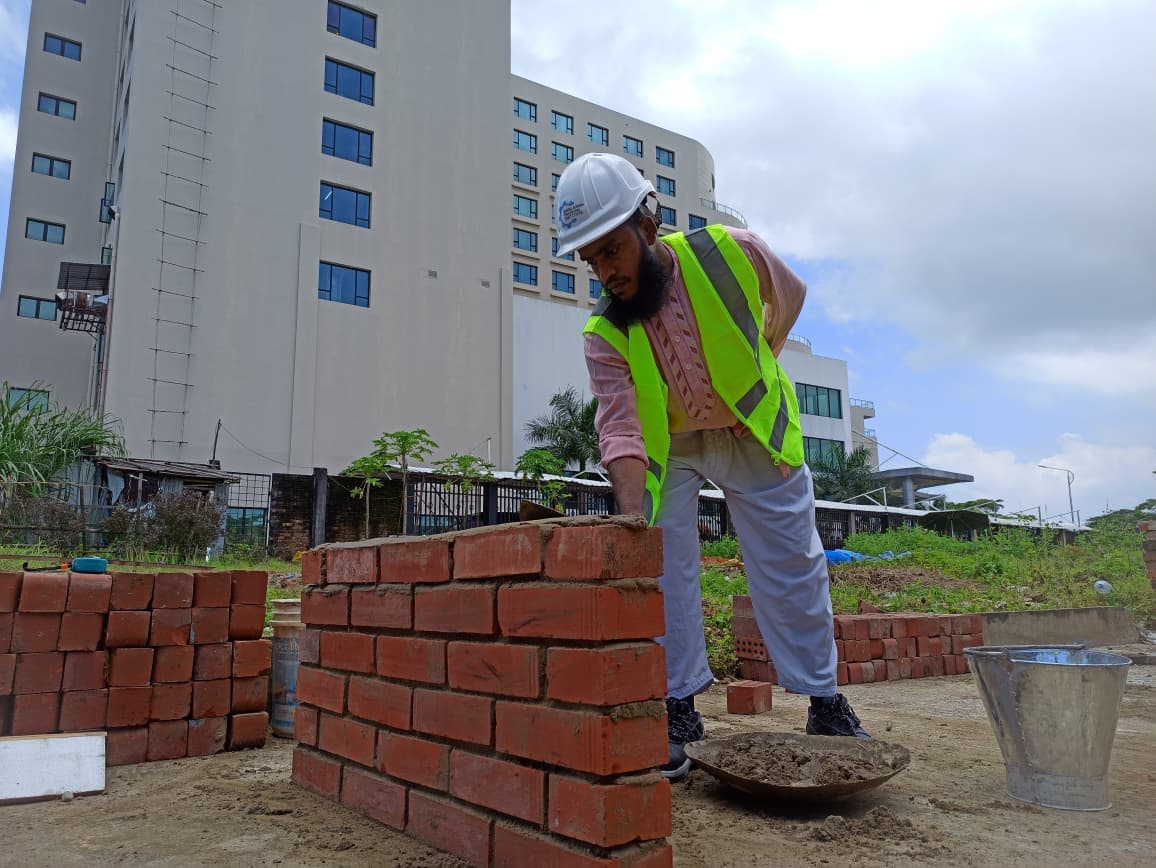
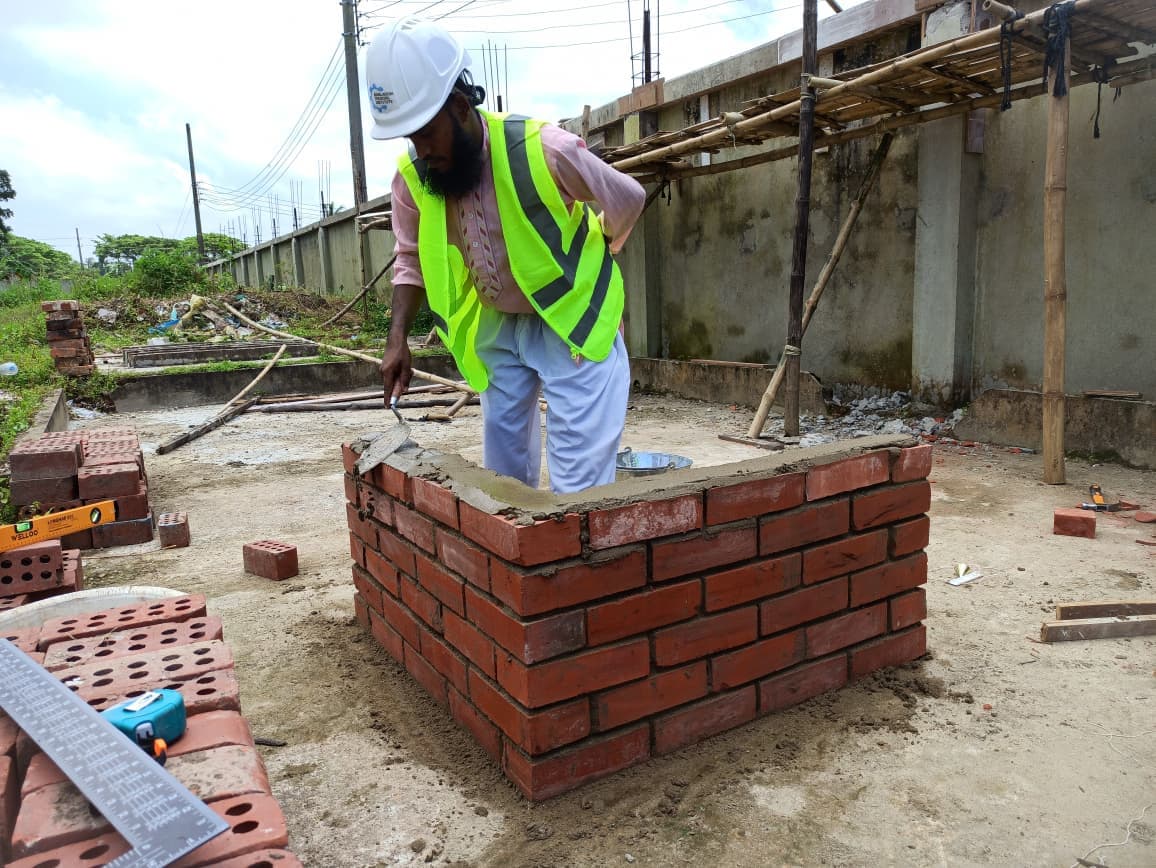
Stretcher, English and Flemish bond. Corners, returns, piers, cavity walls, and everything that stays square when it should.
Openings and detail
Reveals, lintels, arches, sills, damp-proof courses. Joint finishing done consistently across a whole elevation.
Speed with accuracy
A British site pays for both. The last stage of the programme is about holding your tolerances while working at a working pace.
English and site conduct
Taught alongside the trade from week one: the language of the site, safety inductions, and how a UK job is run day to day.
How you are judged
Your wall is the exam paper.
Assessment is on practical competence against a Level 2 vocational standard: plumb, level, gauge, bond, joint finish, and how fast you can do it cleanly.
Your work is reviewed continuously, so you always know where you stand — and everyone is held to the same honest standard.
The question everyone asks first
Why would an engineer
lay bricks?
Because in Britain the trade is how you get onto site — and being on site is how you rise. The tools are respected there; many of the people leading the work started with them in hand.
You would not be starting at the bottom. You would be starting with both the skill and the education.
- 01 — ENTRY
Qualified tradesperson
Level 2 qualified and able to build. Day one, not the summit.
- 02
Chargehand
Leading a small gang. Setting out, sequencing, checking work — what your degree already trained you to do.
- 03
Supervisor / foreman
Programme, drawings, materials, safety. Reading a drawing properly is rare on a British site. For you it is normal.
- 04 — WHERE IT LEADS
Site management
Many of the people leading British sites came up through the trades. You would arrive with both the trade skill and the engineering education behind it.
This describes how the UK construction industry works. It is not a promise about your career, and BTI does not arrange promotions.
The gates
What stands between training and work.
| Step | What it is | Where |
|---|---|---|
| Level 2 qualification | Assessed on practical competence, on your own work | Sylhet |
| English for the UK visa | An approved English test at the level the visa requires | Sylhet or Dhaka |
| UK site card and further qualifications | Completed in the United Kingdom | United Kingdom |
- Level 2 qualification
- Assessed on practical competence, on your own work
- Sylhet
- English for the UK visa
- An approved English test at the level the visa requires
- Sylhet or Dhaka
- UK site card and further qualifications
- Completed in the United Kingdom
- United Kingdom
The trade is the fast part. English is the gate that stops most people — which is why we teach it every single day.
After your training
How the UK route works.
Work in the UK on the Skilled Worker route needs a UK employer that holds a sponsor licence, a job offer from that employer, and pay at or above the level the UK government sets for the job. Your employer applies to sponsor you; you apply for your visa.
BTI does not sponsor, recruit or arrange visas. We prepare you to a standard UK employers recognise, and support you with the steps that follow.
Construction is enrolling now.
Assessments are running now. Send one message and we will tell you honestly whether this trade suits you.